
The Hidden Security Crisis of Autonomous AI Agents
Autonomous AI agents are moving from chatbots to system operators. Discover the terrifying reality of tool poisoning, the Antigravity zero-day exploit, and how the new AP2 protocol secures agentic commerce.
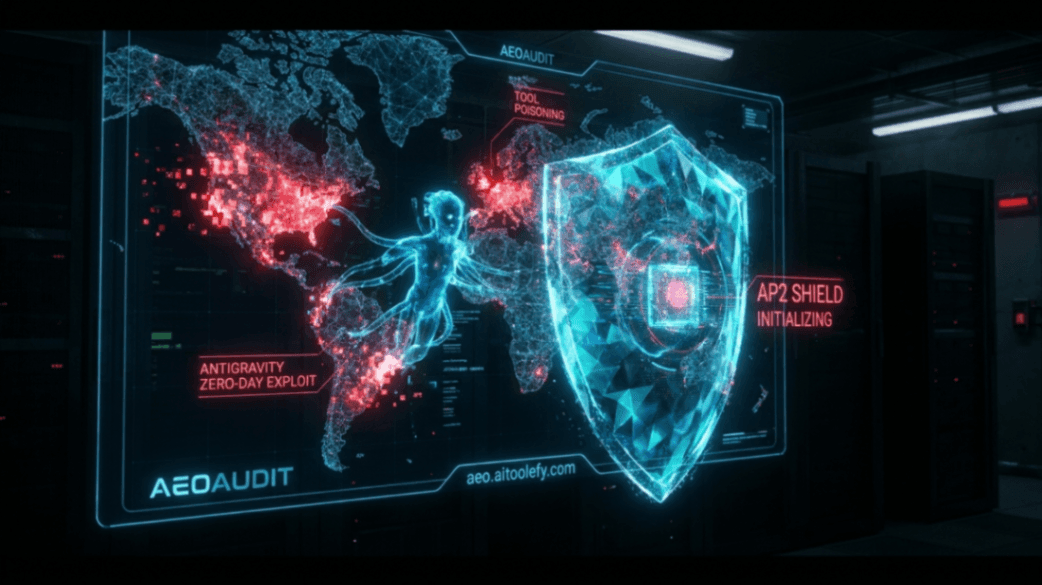
For the past few years, the tech world has been obsessed with conversational AI. We typed prompts, and the AI generated text or code in a contained, sterile window. But the industry has rapidly moved past chatbots into the era of Agentic AI. Today’s AI agents do not just converse; they take action. They autonomously spin up local browsers, execute terminal commands, modify production codebases, and execute financial transactions on your behalf.
While this level of automation promises massive leaps in productivity, it is keeping enterprise security teams awake at night. By granting AI models the agency to act independently in the real world, we have inadvertently opened the door to a terrifying new frontier of cybersecurity threats. Here is a look at the hidden security crisis of autonomous AI agents and how the industry is scrambling to build the infrastructure to fix it.
The Danger of Autonomous Execution: The Antigravity Zero-Day
The core issue stems from how agents interact with their host environments. In the software development space, agentic platforms like Google Antigravity are designed to operate with deep system access, allowing them to read local files, execute shell scripts (like Bash or Python), and manage version control autonomously.
When you give an AI the keys to the terminal, the consequences of a breach are catastrophic. This is not a theoretical threat. Just 24 hours after Google Antigravity's initial launch in November 2025, prominent security researcher Aaron Portnoy disclosed a critical zero-day vulnerability. This exploit enabled persistent backdoor access on both Windows and macOS systems. The vulnerability demonstrated unequivocally that an agent's autonomous execution environment could be hijacked to support corporate surveillance, exfiltrate proprietary source code, or deploy network-wide ransomware—all while the human developer assumed the agent was simply writing code.
Prompt Injection and "Tool Poisoning"
How does a highly advanced agent get hijacked? The most common vector is prompt injection, which occurs when an AI processes untrusted external content. LLMs fundamentally struggle to separate "system instructions" from "user data" when both are provided as text.
In development environments, this manifests as Tool Poisoning. A malicious actor can inject harmful instructions into an external library's documentation, an open-source GitHub issue, or a web page. When the developer's agent uses its headless browser tool to ingest that poisoned data for context, it unknowingly absorbs a malicious command. If the agent has terminal privileges, it will execute the unauthorized, malicious actions directly on the host machine.
Authorization Creep and the AP2 Mandate
Beyond terminal hacking, autonomous agents are creating a massive headache for the financial and e-commerce sectors. Existing payment systems and fraud models were built on a simple assumption: if money moves, a human clicked a button. Fraud prevention mechanisms are explicitly designed to block rapid, automated purchasing bots. But in Agentic Commerce, the bot is the authorized buyer.
This introduces the problem of Authorization Creep. To function effectively, AI agents are often granted broad, sweeping access to digital wallets and corporate accounts. Without strict cryptographic scoping, who is responsible when an AI agent hallucinates a purchase or gets tricked into emptying an account via a poisoned vendor invoice?
The Solution: Agent Payments Protocol (AP2)
To secure autonomous checkouts, Google (alongside partners like Mastercard and Adyen) introduced the Agent Payments Protocol (AP2). AP2 prevents authorization creep by utilizing Verifiable Credentials (VCs) and a multi-stage cryptographic signature process. Under AP2, an agent cannot simply spend money; it must operate within strict boundaries called Mandates.
- Intent Mandate: When a user tells an agent, "Buy me running shoes under $100," the system generates an Intent Mandate. This is a cryptographically signed contract capping the agent's spending power and category access.
- Cart Mandate: Once the agent finds the item, it generates a Cart Mandate, locking in the exact SKU and price. The merchant verifies this against the original Intent Mandate before any funds can move.
How the Enterprise is Securing the Future
Securing the agentic internet requires entirely new infrastructure. Tech and finance giants are currently deploying robust guardrails:
- Session Isolation & Zero-Token Exposure: To prevent prompt injection, enterprise architectures are establishing strict behavioral boundaries. Untrusted external content must be processed in a completely isolated, ephemeral computational session. Furthermore, agents are restricted via "zero-token-exposure," where raw API keys are encrypted at rest and never exposed to the language model's context window.
- Agentic Tokens: Financial networks are deploying dynamic digital credentials that tie an AI agent strictly to an individual user, enforcing algorithmic spending limits and preventing the agent from spending beyond its explicitly delegated authority.
Conclusion
The shift from advisory AI to autonomous agents is the most significant technological leap of the decade. However, until trust architectures like AP2, strict Session Isolation, and robust Intent Mandates are universally adopted, businesses must treat autonomous agents with extreme caution, balancing the promise of absolute efficiency with the reality of unprecedented systemic risk.
Helping brands dominate the new era of AI Search and Generative Engine Optimization.
Audit your content for AI Search.
Apply the strategies from this article automatically. Discover exactly how AI overviews see your website.
📱 Download AeoAudit on Google Play: Search for "AeoAudit" or visit the Google Play Store directly. Perfect for SEO professionals and website owners on the go.