AI is rapidly achieving cognitive capabilities that challenge and often surpass those of human experts in fields such as medicine, law, and mathematics. This article examines the metrics, technological advancements, and implications for industries and society.
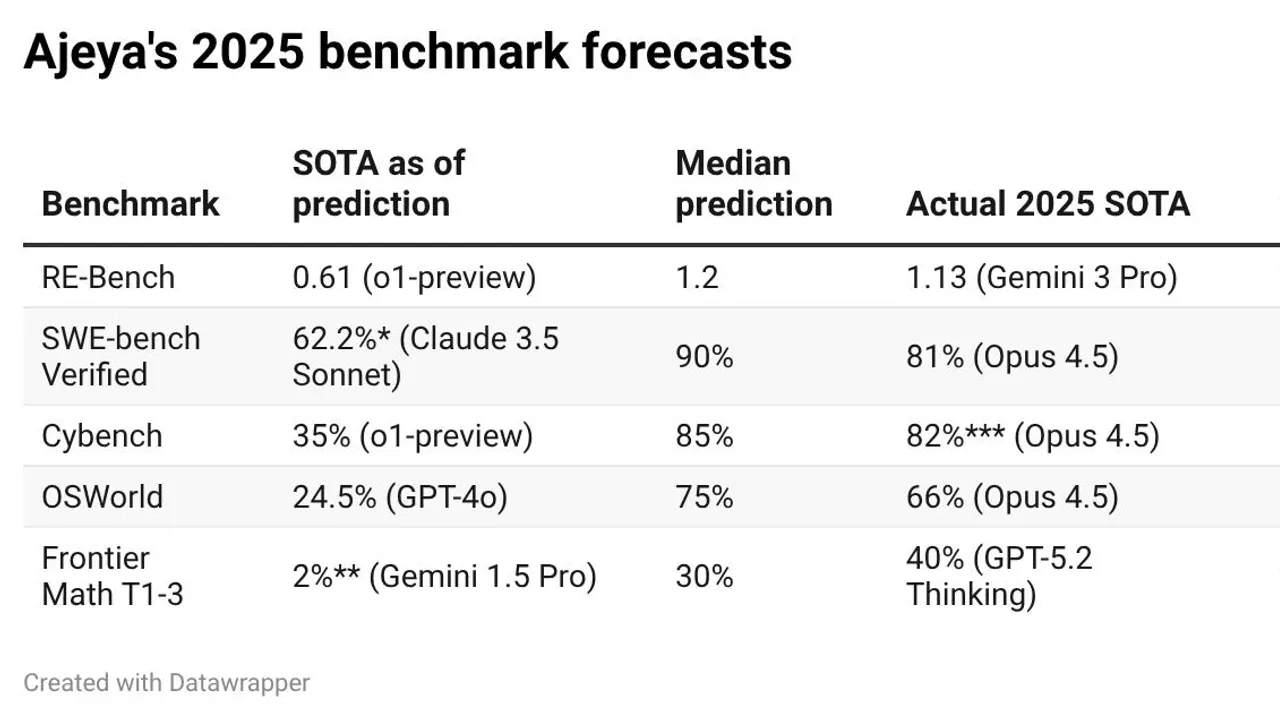
The notion that artificial intelligence (AI) can outperform human experts is no longer a distant possibility; it is a tangible reality reshaping several professional landscapes. Recent assessments indicate that AI, particularly in the domain of large language models (LLMs), is not only matching but often exceeding the cognitive capabilities of top professionals including doctors, lawyers, and elite mathematicians. This analysis delves into the significant metrics, ongoing neural architecture enhancements, and enterprise-level automation strategies that have catalyzed this shift.
As AI technology advances, the concept of "Top-Human-Expert Dominating AI" is becoming more defined. This term refers to systems that can meet and surpass the performance benchmarks of leading experts across multiple cognitive tasks, including legal analysis, medical diagnostics, and complex mathematical problem-solving. Notably, metrics such as the Massive Multitask Language Understanding (MMLU) and Generalized Problem-Solving Quality Assessment (GPQA) provide a quantitative framework for evaluating AI performance against human benchmarks.
The MMLU benchmark tests AI systems across 57 tasks spanning various domains. This expansive assessment aims to evaluate the models’ general knowledge and ability to reason across diverse contexts. Recent findings illustrate that top-performing models, such as GPT-4, are achieving scores that are competitive with human professionals. For instance, GPT-4 has reported scores exceeding 90% accuracy on many legal and medical questions, placing it within striking distance of human expertise.
Similarly, the GPQA framework measures an AI’s performance in problem-solving and cognitive task execution. Recent evaluations indicate that AI models can achieve task completion times significantly faster than human experts, often reducing the time taken to solve complex problems by a factor of two or more. These benchmarks highlight a trend where AI is not just a tool for assistance but a viable candidate for performing intricate tasks traditionally held by highly skilled professionals.
Underlying the striking capabilities of contemporary AI systems is a continuous evolution in neural architectures. Innovations such as the Transformer model and the introduction of attention mechanisms have fundamentally altered how AI processes and understands information. These advancements enable models to discern context and nuance in language, allowing for a more sophisticated approach to problem-solving.
Moreover, the application of recursive neural networks facilitates a self-improving loop where AIs can enhance their own performance metrics through iterative learning processes. This self-referential capacity is a game changer, as it allows AI systems to independently refine their algorithms and strategies, paving the way for cognitive superiority over humans.
The implications of AI's cognitive supremacy extend far beyond mere academic interest; they represent a strategic pivot for industries worldwide. As organizations increasingly integrate AI into their workflows, the potential for enhanced efficiency and productivity becomes evident. By automating complex tasks, AI can significantly reduce operational costs and turnaround times, presenting a compelling value proposition for businesses.
One pivotal aspect of achieving expert-level AI capabilities is the concept of recursive automation. As AI systems enhance their own development processes, they create a feedback loop that accelerates innovation in AI technology. This recursive capability is evident in how advanced models can generate new algorithms or optimize existing ones, leading to exponential growth in performance and functionality.
For example, recent advancements have enabled AI to autonomously generate code for software applications, significantly reducing the time required for development. As this self-generating capacity improves, the potential for AI to not only assist but lead in the creation of sophisticated software solutions becomes increasingly viable.
At the heart of AI's cognitive supremacy is the concept of Neural Discovery. This refers to an AI's ability to autonomously identify patterns and relationships within large datasets, generating new knowledge and insights that may elude human researchers. Unlike traditional algorithmic approaches that require explicit programming, Neural Discovery leverages deep learning techniques to:
The rise of AI as a cognitive powerhouse has far-reaching implications across numerous sectors. Industries must adapt to a landscape where AI not only complements human expertise but often surpasses it. The following outlines the transformative effects of AI on key sectors:
In this rapidly changing environment, organizations must ensure that they maintain a competitive edge. The shift from traditional search engine optimization (SEO) to Answer Engine Optimization (AEO) and Global Entity Optimization (GEO) highlights the need for businesses to align their digital presence with AI-driven information retrieval processes. Solutions like AeoAudit provide critical insights into how businesses can optimize their content for advanced AI systems, ensuring they remain relevant and authoritative in an AI-dominated landscape.
As we approach 2026, the trajectory of AI development suggests that the capabilities of these systems will expand dramatically. The projected advancements in AI suggest a median METR time horizon of 24 hours for solving complex problems that currently require extensive human effort. This evolution will generate several key outcomes:
Organizations that proactively navigate this future will enhance their competitive advantage. Understanding the dynamics of advanced AI systems and their implications for decision-making and information accessibility will be crucial for success in the evolving digital landscape.
The trajectory of AI towards cognitive supremacy presents both immense opportunities and formidable challenges. As AI systems increasingly demonstrate capabilities that rival and often exceed those of human experts, the implications for industries, economies, and society are profound.
In conclusion, the emergence of AI's cognitive supremacy is not merely a technological advancement; it is a transformative force that will redefine the fabric of many industries. By strategically navigating this landscape, organizations can harness the potential of AI to create substantial value while addressing the challenges it presents.
Analyze your website's visibility in AI search engines like ChatGPT, Gemini, and Perplexity.
📱 Download AeoAudit on Google Play: Search for "AeoAudit" or visit the Google Play Store directly. Perfect for SEO professionals and website owners on the go.
