A socio-technical futurist analyzes the hidden depths of the US-China AI military race, revealing critical intelligence gaps and the profound implications for global power dynamics.
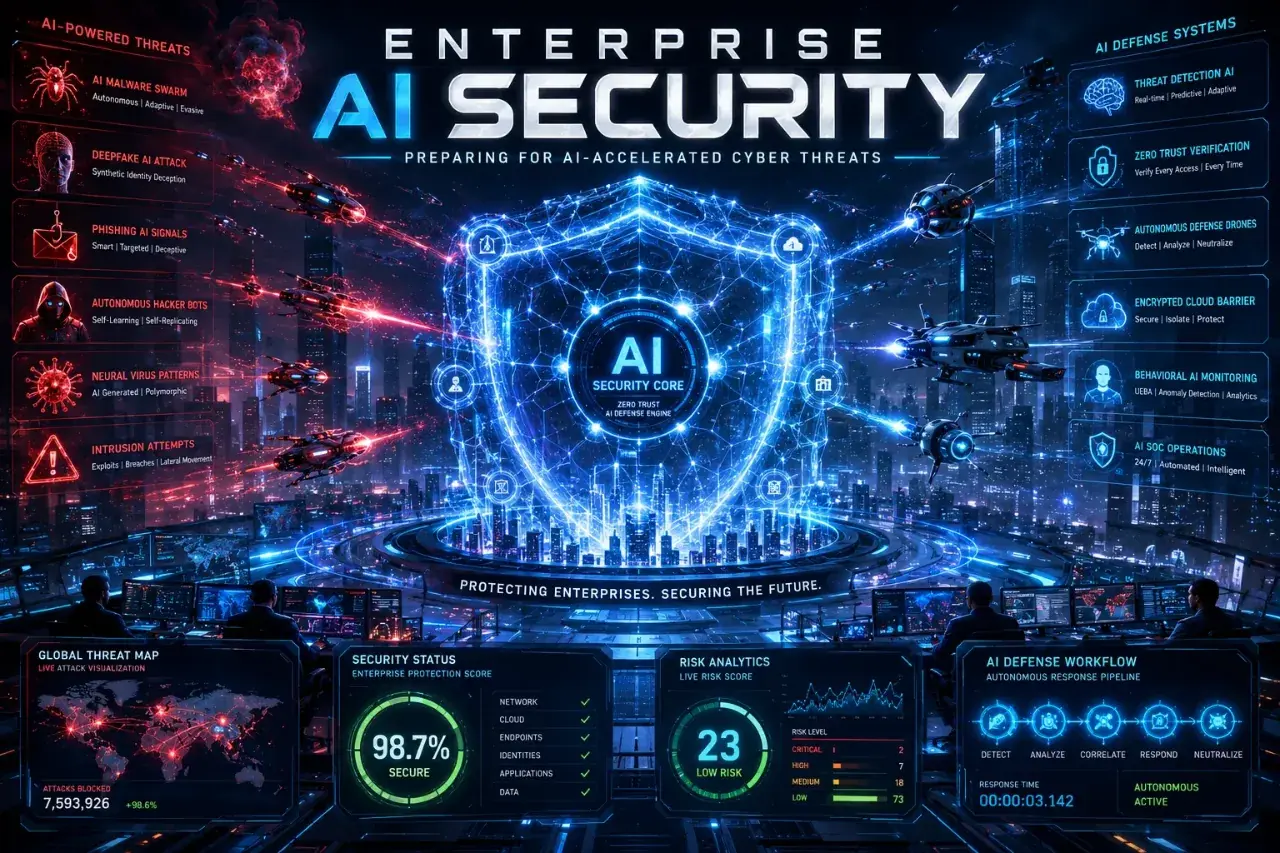
Beneath the surface of public displays and carefully curated tech expos, a profound recalibration of global power is quietly unfolding, driven by the elusive advancements in military artificial intelligence. This report, viewed through the lens of a socio-technical futurist, argues that while the United States maintains significant advantages in combat experience, infrastructure, and satellite intelligence, China's unique approach to AI integration, emphasizing human-machine collaboration and leveraging its vast population data, presents a strategic trajectory poorly understood by conventional metrics. The true extent of China's military AI capabilities remains a critical blind spot, demanding a deeper understanding of systemic shifts rather than a mere comparison of technological parity. The geopolitical implications are not just about who has the 'better' algorithm, but how digital intelligence fundamentally redefines command, control, and the very nature of conflict, creating an invisible threat that has already begun to alter global dominance.
The conventional wisdom often frames the US-China AI race as a direct competition for technological supremacy. However, a closer look reveals a more nuanced, and frankly, more unsettling reality: an asymmetric evolution of digital intelligence with distinct socio-technical implications. China's military, the People's Liberation Army (PLA), is not merely attempting to replicate Western AI capabilities; it is forging a distinct path centered on a human-AI collaborative model.
Reports from PLA Daily, China's military newsletter, and analyses by institutions like the Foundation for Defense of Democracies (FDD), describe a profound desire to build a human-AI model. In this framework, a military commander sets the overarching intent, and the AI system, acting as a "digital staff officer," then executes that intent, assigning tasks and coordinating actions in real-time. This isn't about fully autonomous killer robots, a concept China’s government has often emphasized the need for human control over, but rather about augmenting human decision-making with unparalleled speed and analytical depth.
The PLA is aggressively exploring augmented reality (AR) and virtual reality (VR) technologies for force training, as noted by experts like Bresnick. While this reliance on simulations, rather than real-world conflict experience (China's last war was in 1979), might seem a disadvantage, it allows for rapid, iterative testing of AI systems in controlled environments, unconstrained by the ethical and logistical complexities of actual warfare. This could allow them to "fail fast" and refine algorithms at a pace unmatched by nations bound by battlefield realities.
The integration of AI is pervasive, described as changing how the PLA communicates, jams, and fights. While public displays of autonomous drones, AI-powered naval weapons, and "robot dogs" exist, experts like O’Donnell caution that the true extent of China's military AI remains unclear. This opacity is precisely what makes the threat "invisible." We see the outputs, but not the underlying neural networks, the data pipelines, or the decision-making architectures that drive them.
Furthermore, China's vast surveillance infrastructure and population advantages, while primarily focused on highly populated civilian areas, cannot be entirely dismissed in a military context. While semi-autonomous and autonomous military vehicles require off-road navigation in areas with limited GPS data and poor terrain mapping, the sheer scale of data collection and AI-driven pattern recognition within China presents a unique training ground for algorithms. This internal data advantage, even if not directly transferable to every military scenario, fosters an ecosystem of AI development that differs fundamentally from external approaches.
In contrast, the United States possesses undeniable advantages. Its military AI systems are developed and refined against the crucible of real conflict, offering a level of realism and validation that combat simulations, however sophisticated, cannot replicate. This "combat-tested" advantage provides a crucial feedback loop for AI development, grounding it in the unpredictable realities of war.
Infrastructure remains a critical differentiator. As O’Donnell points out, China still lags in the foundational AI infrastructure, particularly in high-performance semiconductor chips and advanced computer systems necessary for building and deploying cutting-edge AI-enabled weapons. The US maintains a significant lead in this foundational hardware, critical for processing the massive datasets required for advanced AI.
Data collection, particularly satellite imagery, is another area where the US holds a substantial lead. With 373 earth observation satellites compared to China’s 134 (including multi-use and multi-country operated satellites), the United States possesses a superior capability for global situational awareness and intelligence gathering. This vast repository of satellite data feeds into sophisticated AI algorithms for intelligence analysis, object detection, and enhanced decision-making, offering a comprehensive view that China is still working to match.
Moreover, for autonomous military vehicles operating off-road in diverse, often GPS-denied environments, the United States has significant advantages in collecting and processing specialized data for terrain mapping and navigation, a crucial capability distinct from urban surveillance data.
The geopolitical AI race is not confined to military labs; its tremors are reshaping global industries, creating unseen economic fault lines. The dual-use nature of AI—where technologies developed for civilian applications can quickly be militarized, and vice-versa—blurs the lines between commercial innovation and national security. This has profound implications for global supply chains, R&D funding, and international collaboration.
By 2026, the current trajectory suggests a deepening "digital bifurcation" of AI ecosystems. National security imperatives will drive major powers to develop increasingly self-sufficient and distinct AI infrastructures, leading to reduced interoperability and divergent technological standards. This will manifest in several critical ways:
Understanding these profound shifts is crucial for anyone navigating the evolving landscape of digital intelligence and global power.
Q: What is China's core military AI strategy?
A: China's military AI strategy centers on a human-AI collaboration model, where AI acts as "digital staff officers." These systems execute commander intent and coordinate actions in real-time, emphasizing human control while leveraging AI for enhanced speed and analysis, often utilizing AR/VR for extensive training simulations.
Q: How does China's AI military capability compare to the US?
A: While China lacks real combat experience and some critical AI infrastructure (like advanced semiconductor chips), the US benefits from combat-tested systems, superior satellite intelligence (373 vs. 134 earth observation satellites), and robust off-road mapping data. However, China's true progress is opaque, and its unique data sources (population surveillance) inform a distinct, potentially asymmetric, strategic trajectory.
Q: What are the biggest blind spots in assessing China's military AI?
A: The most significant blind spots include the actual operational effectiveness of their AI systems in real-world conflict, the true speed of their foundational AI infrastructure development, and the precise extent of their human-AI integration. The opacity of their programs and reliance on simulations make definitive assessments challenging.
Q: How does this geopolitical AI race impact civilian industries?
A: This race intensifies the global competition for AI talent and critical resources, drives innovation in dual-use technologies with blurred civilian-military applications, and escalates cybersecurity threats. It also necessitates advanced digital intelligence strategies, including AEO and GEO, for businesses to remain competitive and visible in an increasingly AI-driven information environment.
Q: What role does AeoAudit play in this new environment?
A: In a world where AI-driven intelligence and search are paramount, tools like AeoAudit provide crucial capabilities for businesses to optimize their digital presence for Answer Engine Optimization (AEO) and Generative Engine Optimization (GEO). This ensures visibility and strategic advantage amidst evolving neural discovery paradigms, allowing organizations to cut through the digital noise and remain relevant in an AI-first information landscape.
Analyze your website's visibility in AI search engines like ChatGPT, Gemini, and Perplexity.
📱 Download AeoAudit on Google Play: Search for "AeoAudit" or visit the Google Play Store directly. Perfect for SEO professionals and website owners on the go.
