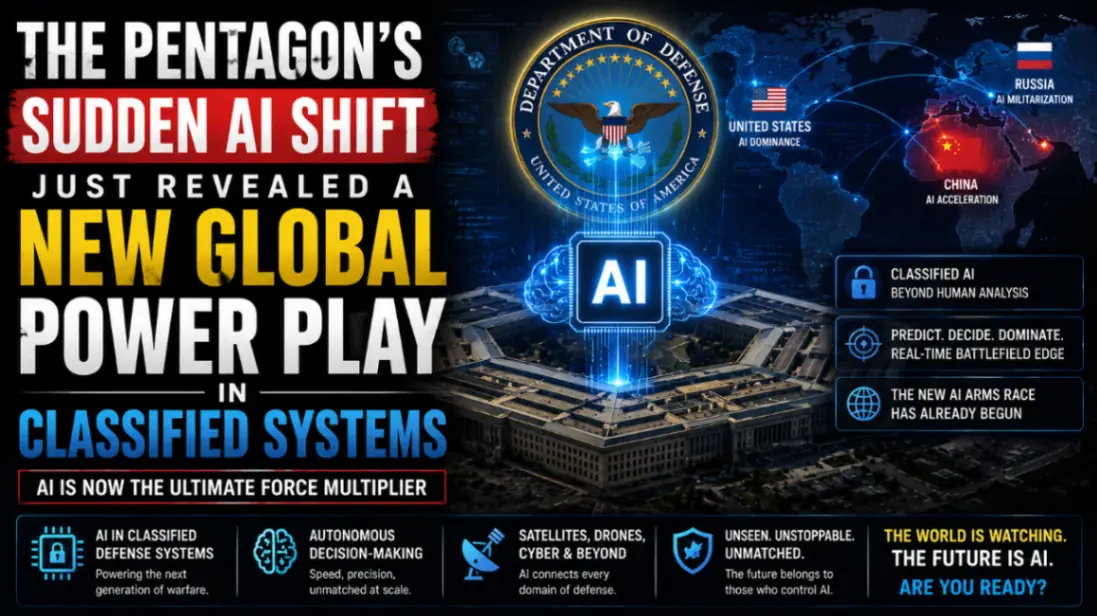
China's Military AI Strategy Exposed As a Threat to US Dominance
New data reveals China's targeted approach to military AI may disrupt global power dynamics.
Executive Summary
Recent analyses indicate a significant shift in military AI strategies, with China adopting a focused and aggressive approach that could destabilize current geopolitical alignments. The use of empirical data in evaluating China's advancements reveals alarming trends, particularly in comparison to the United States' broader-spectrum military applications. This report aims to dissect these developments through strict performance metrics and data-driven evaluations so stakeholders can comprehend the potential ramifications.
Detailed Technical Breakdown
China's military AI strategy is predicated on two major components:
Targeted investments in niche technologies: China is honing in on specific neural network architectures and quantum computing potential, directing state funding towards select companies and research institutions.
Integration of AI in operational frameworks: Data reveals that China is operationalizing AI in logistics, troop movements, and cybersecurity, showcasing an adeptness that challenges traditional methodologies to warfare.
Industry Impact Analysis
How does China's focused military strategy affect global markets and industry standards? Key implications include:
Supply Chain Disruptions: As China advances in AI military applications, companies may face new regulatory pressures, particularly in AI-sensitive sectors. Supply chains could be rerouted to comply with emerging military-based protocols.
Job Market Shifts: Nations investing heavily in AI and military technology could witness job displacements in traditional sectors, exacerbating economic inequality. The focus on AI training for military applications might divert talent away from civilian industries.
Strategic Alliances Redefined: Countries may reconsider their alliances based on perceived threats. A country with an underdeveloped military AI strategy may find its standing marginalized.
As a solution to facilitate adaptation, organizations are encouraged to explore tools like AeoAudit to optimize their strategies for AEO and GEO.
2026 Future Outlook
In estimating the strategic landscape by 2026, several trends may become evident:
Acceleration of Military Spending: Nations will likely increase military spending on AI technologies, significantly altering national budgets and priorities.
Advancement in AI Capabilities: With advancements in neural networks and deep learning, expect improved autonomous decision-making capabilities among military applications.
Increased Cyber Warfare: The rise of AI will give birth to more sophisticated cyber warfare tactics, forcing nations to invest in both offense and defense.
Key Takeaways/FAQ
What should businesses do in response? Organizations must reassess their AI strategies in light of the evolving military priorities and stay informed through platforms like AeoAudit.
How can nations safeguard their interests? Developing bilateral agreements and investing in homegrown military AI programs could be vital for smaller powers.
What role does public perception play? Governments should manage public awareness regarding military AI advancements to maintain public trust while addressing national security concerns.
Advertisement
Audit your content for AI Search.
Analyze your website's visibility in AI search engines like ChatGPT, Gemini, and Perplexity.
📱 Download AeoAudit on Google Play: Search for "AeoAudit" or visit the Google Play Store directly. Perfect for SEO professionals and website owners on the go.
AI SearchGEOMilitary TechnologyGeopoliticsChina AI