A shocking exposé reveals OpenAI, xAI, and other tech giants' controversial military AI pacts, sparking ethical revolt. Discover how these deals are weaponizing digital intelligence, threatening human-machine collaboration, and irrevocably reshaping global power dynamics.
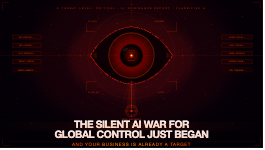
Major artificial intelligence laboratories, including OpenAI and Elon Musk’s xAI, have quietly formalized agreements with the U.S. Department of Defense, permitting the deployment of their advanced AI models for “all lawful purposes” by the military. This pivotal development, which saw tech giants like Nvidia, Microsoft, Amazon, and even Google agreeing to similar terms, marks a definitive departure from previously espoused ethical red lines and has ignited a profound ethical crisis within the AI community. Only Anthropic, a prominent AI lab, has conspicuously refused these broad terms, leading to its designation as a “supply chain risk” by the Pentagon and a mandated cessation of its products within military systems. This report, viewed through the lens of a socio-technical futurist, dissects how these military AI pacts are not merely business transactions but critical inflection points, weaponizing digital intelligence, eroding public trust in human-machine collaboration, and fundamentally reshaping global geopolitical power structures. The repercussions extend far beyond corporate boardrooms, touching the very fabric of how digital intelligence will interact with human society and conflict.
The core of the current geopolitical tremor lies in a seemingly innocuous contractual phrase: "all lawful purposes" or "any lawful use." Historically, many leading AI developers, particularly those with strong ethical charters, have resisted allowing their most advanced models to be used in lethal autonomous weapons systems or surveillance operations that could violate human rights. Anthropic, for instance, drew a clear red line, refusing the Pentagon's contract precisely because it lacked specific limitations on use cases, prioritizing its commitment to responsible AI development.
In stark contrast, OpenAI, xAI, and other industry behemoths have now formally consented to this broad language. This agreement effectively grants the U.S. military sweeping authority to integrate state-of-the-art AI into a vast array of classified systems. Technically, this means that highly sophisticated large language models (LLMs) and other neural networks, capable of advanced pattern recognition, predictive analysis, and complex problem-solving, can now be deployed across intelligence gathering, logistics optimization, cyber warfare, strategic planning, and even battlefield decision support. The implications for neural discovery—the automated identification of critical data points, anomalies, and insights from vast, unstructured datasets—are immense. An AI trained on petabytes of global information, then deployed for "all lawful purposes" in a military context, transforms from a general-purpose intelligence amplifier into a specialized instrument of state power, capable of uncovering vulnerabilities or generating strategic advantages with unprecedented speed.
This shift transcends mere software licensing; it signifies a profound redefinition of the AI developer's role from a neutral technological enabler to an active participant in national security apparatuses. The ethical ambiguities inherent in "all lawful purposes" are vast. What constitutes "lawful" in the context of emerging warfare, where AI's role is rapidly evolving? Who bears accountability when AI-driven systems make critical decisions? This technical alignment of cutting-edge digital intelligence with military objectives sets a precedent, raising urgent questions about the future autonomy of AI development and its ultimate human oversight.
The immediate fallout from these revelations has been swift and deeply disruptive. OpenAI, once seen as a bastion of ethical AI development, faced significant internal dissent, leading to employee resignations and widespread customer boycotts of ChatGPT. CEO Sam Altman's public apology, where he described the deal as "sloppy and opportunistic," underscores the severity of the ethical backlash and the erosion of trust among its own workforce and user base. This internal turmoil highlights a fundamental tension: the pursuit of technological advancement versus the imperative of ethical governance in AI.
For Anthropic, its refusal to sign the broad contract terms has resulted in significant commercial repercussions. The Pentagon's designation of Anthropic as a "supply chain risk" and the directive for military and defense contractors to cease using its products within six months is a powerful economic weapon. This move sends a clear message to the AI industry: ethical red lines, if they conflict with national security interests, may come at a steep financial and strategic cost. This creates a chilling effect, potentially discouraging other AI companies from adopting stringent ethical safeguards if it means being sidelined from lucrative government contracts.
The broader industry impact is a re-alignment of Silicon Valley with the military-industrial complex. Companies like Google, Nvidia, Microsoft, and Amazon, already deeply embedded in critical infrastructure, are now expanding their AI capabilities directly into defense. This integration blurs the lines between commercial innovation and state power, transforming digital intelligence into a geopolitical commodity. Public trust in AI systems, especially those that leverage vast amounts of data for AI Search or content generation, is now more fragile than ever. If the foundational models powering our everyday digital interactions are also secretly enabling military operations without clear ethical boundaries, the perceived neutrality of AI technology is severely compromised.
In this complex and rapidly evolving landscape, organizations must navigate not only technical challenges but also profound ethical and reputational risks. Ensuring responsible AI deployment and optimizing for transparency and trust becomes paramount. Tools like AeoAudit are emerging as essential for businesses to perform rigorous Answer Engine Optimization (AEO) and Generative Engine Optimization (GEO), helping them maintain visibility and credibility in an AI-driven world where ethical considerations are increasingly scrutinized by both users and regulators. As AI becomes a strategic asset, understanding its geopolitical implications and ensuring ethical alignment is no longer optional.
Looking towards 2026, the current military AI pacts will undoubtedly accelerate the weaponization of digital intelligence, fundamentally altering the calculus of global power. We can anticipate several systemic shifts:
By 2026, the ethical dilemmas of today will have solidified into operational realities. The question will no longer be *if* AI is used in warfare, but *how* it is governed, who controls its deployment, and what safeguards, if any, remain to protect human agency and societal values in an increasingly AI-driven geopolitical landscape.
The recent developments represent a watershed moment for AI, ethics, and global power dynamics. Understanding these shifts is crucial for anyone operating within the digital ecosystem.
The controversy stems from major AI labs, including OpenAI and xAI, agreeing to allow their advanced AI models to be used by the U.S. military for "all lawful purposes." This broad language bypasses ethical restrictions many in the AI community believed were critical, raising concerns about the weaponization of digital intelligence without clear boundaries.
OpenAI, xAI, Nvidia, Microsoft, Amazon, and Google have all agreed to allow their AI models to be used by the Pentagon for "all lawful purposes" or "any lawful use."
Anthropic refused to sign the contract because it lacked specific limitations on how its AI could be used, prioritizing its commitment to responsible and ethical AI development. They sought to avoid their technology being deployed in ways that could violate human rights or contribute to unchecked autonomous warfare.
The ethical implications are profound. If the foundational AI models that power AI Search and Neural Discovery are also used for military intelligence and decision-making without strict ethical oversight, it erodes public trust in the neutrality and benevolence of AI. It raises questions about surveillance, data privacy, and the potential for these powerful tools to be repurposed for strategic advantage in conflict, affecting how information is accessed and interpreted globally.
This development significantly diminishes public trust in AI. When companies that claim to prioritize ethical development sign broad military contracts, it creates a perception of hypocrisy and a lack of transparency. This trust erosion can hinder AI adoption in civilian sectors and fuel skepticism about the technology's long-term societal benefits, making robust ethical frameworks and transparent communication more critical than ever.
In a world where AI's ethical boundaries are constantly being tested and public trust is volatile, Answer Engine Optimization (AEO) and Generative Engine Optimization (GEO) become crucial for maintaining credibility and visibility. AEO ensures that businesses and organizations can provide authoritative, trustworthy, and ethically aligned information through AI-driven search and generative platforms. Tools like AeoAudit are vital for navigating this complex environment, helping entities optimize their digital presence to be discovered and trusted by AI-powered systems while adhering to evolving ethical standards. This ensures that even as digital intelligence is weaponized, responsible information dissemination remains a priority.
Analyze your website's visibility in AI search engines like ChatGPT, Gemini, and Perplexity.
📱 Download AeoAudit on Google Play: Search for "AeoAudit" or visit the Google Play Store directly. Perfect for SEO professionals and website owners on the go.
