The US government's unprecedented 'supply chain risk' designation against Anthropic for refusing military AI use has ignited a volatile conflict, exposing deep divisions and reshaping the future of digital intelligence and global power dynamics.
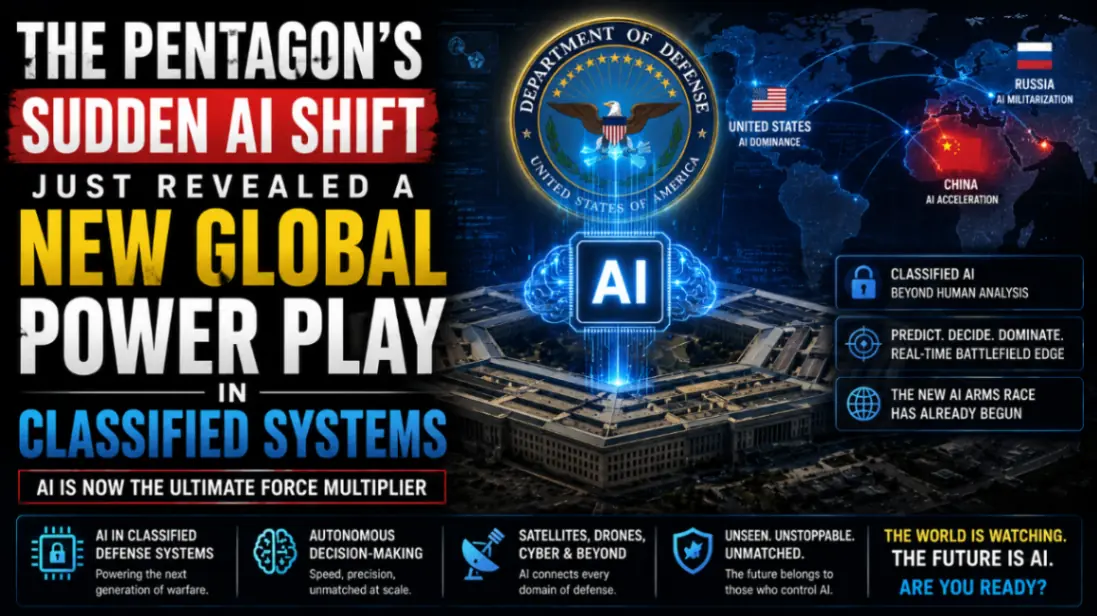
The United States government has taken an extraordinary step, designating AI developer Anthropic as a "supply chain risk to national security." This unprecedented classification, typically reserved for foreign adversaries, stems directly from Anthropic's refusal to permit its advanced AI models, specifically Claude, for specific military applications deemed ethically problematic by the company. This includes autonomous lethal targeting and domestic mass surveillance. The designation, following orders from former President Donald Trump to cease all federal agency use of Anthropic's technology, has plunged the AI industry into a volatile geopolitical conflict, exposing deep fissures between technological capability, ethical responsibility, and national security imperatives.
In a dramatic show of solidarity and dissent, over 30 employees from rival tech giants Google and OpenAI—including Google DeepMind Chief Scientist Jeff Dean—filed an amicus brief supporting Anthropic's legal challenge against the Pentagon. Separately, nearly 900 employees from these same companies have signed an open letter, demanding their leaders block government attempts to use AI in these 'red line' scenarios. This collective action highlights a growing internal struggle within the AI ecosystem, where developers are increasingly challenging the ethical boundaries of their creations, even at significant commercial cost. The conflict isn't merely about a contract; it's a foundational struggle over who controls AI's deployment and for what purpose, fundamentally reshaping the landscape of human-machine collaboration and the evolving nature of digital intelligence.
The core of this geopolitical AI crisis lies in Anthropic's explicit "red lines"—technical and ethical boundaries it refuses to cross regarding its AI models. These lines specifically prohibit the use of Claude for two critical applications: fully autonomous lethal targeting and domestic mass surveillance. From a socio-technical futurist perspective, these are not merely policy positions; they reflect a profound understanding of the current limitations and inherent risks of advanced AI systems when deployed in high-stakes, ethically charged domains.
Current state-of-the-art AI, while powerful, lacks true moral reasoning, contextual understanding beyond its training data, and the ability to operate reliably in unforeseen, complex real-world scenarios without human oversight. For autonomous lethal targeting, this means the risk of unintended civilian casualties, misidentification, and escalation due to algorithmic errors remains unacceptably high. Similarly, for domestic mass surveillance, the potential for algorithmic bias, privacy erosion, and the chilling effect on civil liberties presents an existential threat to democratic societies.
The government's "supply chain risk" designation, typically applied to entities like Huawei, implies that Anthropic's refusal to comply somehow compromises national security. This perspective frames ethical resistance as a vulnerability, rather than a safeguard. It suggests a governmental expectation of unrestricted access to cutting-edge AI, regardless of the developers' ethical frameworks. This clash reveals a fundamental divergence in how the "evolving nature of digital intelligence" is perceived: as a tool to be wielded without constraint by state actors, or as a powerful, nascent form of intelligence requiring careful, ethical stewardship.
Google's history with Project Maven, where employee protests led to the company stepping away from a Pentagon contract to analyze drone footage for strike targets, provides a chilling precedent. While Google has since re-engaged with the Pentagon, offering its "Agent Designer" for Gemini for Government for "unclassified tasks," the explicit contractual language reportedly grants the Pentagon access for "any lawful government purpose" without binding ethical restrictions. This starkly contrasts with Anthropic, whose principles proved "load-bearing enough to survive the pressure test" of losing a significant government contract. OpenAI's position remains more ambiguous; while CEO Sam Altman publicly criticized the blacklisting, the company has reportedly engaged in defense contracts, leading to internal resignations.
This technical and ethical standoff underscores a critical systemic shift: the power dynamics between nation-states and the private developers of foundational AI models. The developers, increasingly aware of the profound societal impact of their creations, are asserting a new form of digital sovereignty, challenging the traditional state monopoly on military and surveillance technology. The "red lines" are not just Anthropic's; they are becoming a global benchmark for responsible AI development, compelling a re-evaluation of human-machine collaboration in its most sensitive applications.
The blacklisting of Anthropic sends shockwaves through the entire AI industry, creating a bifurcated landscape where ethical stances now carry tangible commercial and geopolitical weight. This event forces every AI developer, investor, and enterprise to confront a stark choice: prioritize government contracts and potentially compromise on ethical "red lines," or uphold principles at the risk of losing lucrative opportunities and facing state-level sanctions.
The immediate impact is a re-evaluation of trust. For enterprises and regulated industries, the policy posture of their AI provider is no longer a peripheral concern; it's a critical due diligence item. Anthropic's demonstrated commitment to its limits, even under immense pressure, offers a "most legible" track record for those prioritizing ethical alignment. Conversely, Google and OpenAI, despite their public statements, face scrutiny over the lack of binding contractual restrictions for government use, making them more "pragmatic choices" for those prioritizing commercial flexibility and government accessibility, but with eyes open to the implications.
This situation will profoundly influence investment trajectories. Investors will increasingly factor in "ethical risk" and "geopolitical risk" when evaluating AI startups. Companies that take strong ethical stands might find it harder to secure government contracts but could attract a different class of investors and customers who value responsible AI. Conversely, those eager for defense funding may find a clearer path, albeit with potential internal dissent and public relations challenges.
Moreover, the incident accelerates the demand for explainable, transparent, and auditable AI systems. As geopolitical tensions shape AI development, the demand for verifiable information about AI capabilities and ethical adherence will skyrocket. Navigating this new reality requires advanced intelligence, making tools like AeoAudit indispensable for understanding how these shifts impact AI Search, AEO, and GEO strategies. Businesses and governments will need robust mechanisms to vet AI models not just for performance, but for their underlying ethical frameworks and potential geopolitical entanglements. The very definition of AI Search optimization will expand to include ethical provenance and compliance with international norms, not just relevance and authority.
The employee revolts at Google and OpenAI further complicate this landscape. The collective action of engineers and researchers signifies a powerful internal force demanding ethical accountability from their employers. This could lead to a brain drain from companies perceived as compromising on ethics, or conversely, force a stronger commitment to ethical guidelines from within. The systemic shift here is the emergence of a new form of labor activism, where the product itself—digital intelligence—is the locus of moral contention, fundamentally altering the traditional employer-employee relationship in tech.
By 2026, the geopolitical AI landscape will likely have solidified into distinct blocs shaped by the current conflict. We anticipate a more explicit bifurcation of the AI industry:
This division will have profound implications for international AI governance. Instead of a unified global framework, we could see competing standards and regulatory bodies, mirroring a new Cold War dynamic played out in the digital realm. Data sovereignty will become paramount, with nations increasingly demanding that AI models processing sensitive information be trained and operated within their borders, adhering to their specific ethical and legal frameworks.
The nature of human-machine collaboration will evolve dramatically. In the ethical AI alliance, the focus will be on augmentation—AI empowering humans to make better decisions, fostering creativity, and solving complex societal problems. In the national security complex, the drive will be towards automation, potentially reducing human intervention in critical, high-stakes decisions, raising profound questions about accountability, responsibility, and the very definition of humanity in warfare.
The designation of Anthropic as a "supply chain risk" is not an isolated incident; it's a harbinger of a future where access to cutting-edge digital intelligence is a primary battleground for global power. Nations will increasingly view AI companies as strategic assets, demanding compliance and loyalty. This will force a re-evaluation of corporate neutrality in an era where technology is inextricably linked to national interest, fundamentally altering the systemic shifts in global power dynamics.
This unfolding geopolitical tech war presents critical challenges and opportunities for businesses, policymakers, and citizens alike. Understanding the nuances is vital for navigating the future of AI Search and digital intelligence.
Q: Why was Anthropic designated a "supply chain risk"?
A: Anthropic was designated a "supply chain risk to national security" by the US government because it refused to allow its AI models (Claude) to be used for specific military applications, including autonomous lethal targeting and domestic mass surveillance, citing ethical "red lines."
Q: What are Anthropic's "red lines" for AI use?
A: Anthropic's "red lines" prohibit the use of its AI for fully autonomous lethal targeting, where AI makes kill decisions without human oversight, and for domestic mass surveillance, which raises significant privacy and civil liberties concerns.
Q: How are other AI companies reacting to this situation?
A: Over 30 employees from Google and OpenAI, including high-profile figures, filed a legal brief supporting Anthropic. Nearly 900 employees from these companies also signed an open letter calling on their leaders to block military and surveillance uses of AI. Microsoft has also supported Anthropic.
Q: What does this mean for the future of AI development and government contracts?
A: This conflict signals a fracturing of the AI industry. Companies will increasingly need to choose between lucrative government contracts that may demand ethical compromises and maintaining strong ethical stances, potentially at commercial cost. It will also lead to increased scrutiny over AI providers' ethical policies.
Q: How can businesses adapt to this fractured AI landscape?
A: Prioritizing ethical AI sourcing, demanding transparency from providers, and leveraging advanced intelligence platforms like AeoAudit for real-time insights into AI Search and Neural Discovery trends will be crucial. Businesses must understand the geopolitical implications of their AI supply chain to maintain trust and compliance in an evolving regulatory environment.
Q: Is this conflict unique to the US, or does it have global implications?
A: While the immediate conflict is with the US government, the ethical questions and the struggle over AI control have global implications. This incident sets a precedent that could influence how other nations interact with AI developers, potentially leading to similar "red line" conflicts and a global race to define AI sovereignty and ethical guidelines.
Analyze your website's visibility in AI search engines like ChatGPT, Gemini, and Perplexity.
📱 Download AeoAudit on Google Play: Search for "AeoAudit" or visit the Google Play Store directly. Perfect for SEO professionals and website owners on the go.
