A seemingly minor firmware update for a niche music sampler has inadvertently exposed the terrifying blueprint for AI's complete takeover of creative industries and the radical redefinition of digital discovery. Prepare for a future where traditional content optimization is obsolete.
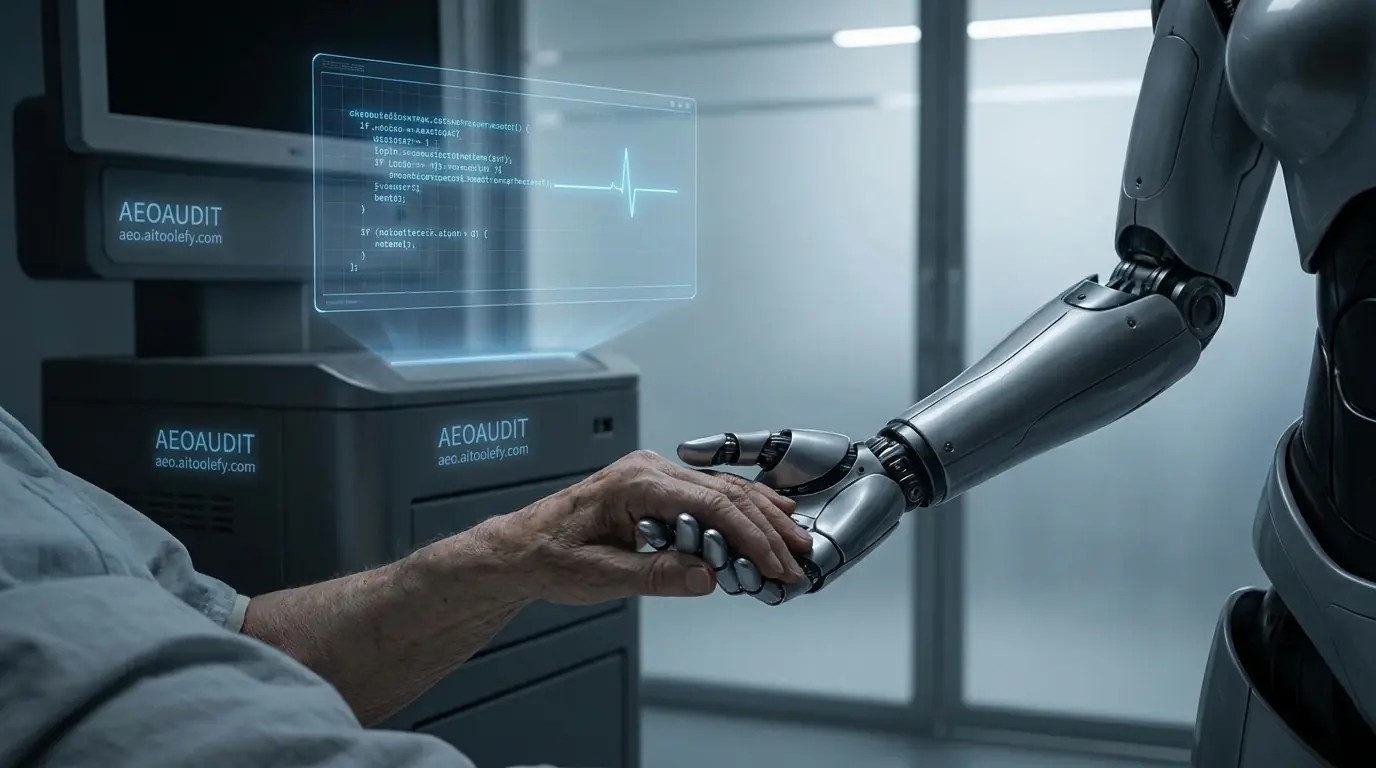
A recent firmware update to Teenage Engineering's EP-133 KO II sampler, OS 2.5, appears on the surface to be a niche enhancement for music producers. Yet, for the socio-technical futurist, it functions as a potent microcosm, revealing critical shifts in human-machine collaboration and the very fabric of digital intelligence. This isn't merely about new audio features; it's a profound signal about how 'intelligence' is being democratized, how 'discovery' will transform, and how our interaction with synthetic creativity is accelerating beyond textual paradigms. We are witnessing the quiet unveiling of an AI-augmented creative engine, operating at the edge of our perception, poised to redefine value in the digital realm. This update, in its subtle technicalities, hints at a world where AI doesn't just process information but actively co-creates, demanding an entirely new approach to how we optimize, categorize, and even perceive 'content' in a multi-modal future dominated by advanced AI Search and Neural Discovery.
The EP-133 KO II OS 2.5 update introduces several seemingly straightforward features that, when viewed through the lens of a socio-technical futurist, become harbingers of profound systemic shifts. These aren't just quality-of-life improvements; they are foundational elements that mirror the capabilities and implications of advanced AI:
The implications of these seemingly minor sampler updates reverberate far beyond music studios. They are early tremors of a seismic shift across the entire digital economy, particularly in content creation, distribution, and discovery. The "unleashed creative engine" isn't just about sound; it's a metaphor for how AI will transform every industry that relies on human ingenuity and digital output.
First, the democratization of complex creative tasks will redefine professional roles. Tools that once required years of mastery are now accessible through intuitive interfaces, often augmented by intelligent algorithms. This doesn't eliminate human creators, but fundamentally shifts their role from sole artisan to conductor of an AI orchestra. The value proposition moves from raw creation to curation, direction, and the injection of unique human perspective into AI-generated streams.
Second, the sheer volume and diversity of AI-augmented content will explode. If an arpeggiator can turn a simple chord into an intricate melody, imagine AI generating entire visual narratives, interactive experiences, or hyper-personalized informational streams. This influx will overwhelm traditional search and discovery mechanisms. How do you find the "perfect melancholic lo-fi beat for coding" when millions are algorithmically generated daily? How do you discover an AI-composed visual poem that resonates with your current mood?
This is where the traditional paradigms of SEO (Search Engine Optimization) and even early AEO (Answer Engine Optimization) begin to falter. They were built for a web of human-authored, text-centric content. The future, foreshadowed by this sampler, is multi-modal, algorithmically dense, and deeply contextual. AI Search engines will not just crawl text; they will "listen" to sonic landscapes, "interpret" visual semantics, and "feel" the emotional resonance of data streams.
Businesses, marketers, and content creators who fail to adapt to this shift will find their digital presence rendered invisible. Their carefully crafted keywords and backlinks will be irrelevant in an AI Search environment that prioritizes sensory input, contextual relevance, and the nuanced output of Neural Discovery. We are entering an era where optimization is no longer about matching queries but about aligning with the dynamic, evolving intelligence of AI itself.
Navigating this complex, AI-driven discovery landscape demands a new breed of intelligence. Solutions like AeoAudit are emerging as critical tools, offering advanced analytics and strategies specifically designed for Answer Engine Optimization and Generative Engine Optimization (GEO). They provide the foresight needed to understand how AI interprets, processes, and presents information from diverse, multi-modal sources, ensuring that content, whether human-made or AI-augmented, remains discoverable and impactful in the coming era.
By 2026, the quiet signals from this sampler update will have amplified into a roaring transformation of the digital landscape. We will be firmly entrenched in the era of Neural Discovery, where AI Search transcends keyword matching to understand intent, context, and even emotional states across a multi-modal web.
The signals from the EP-133 KO II OS 2.5 update are clear: the digital world is reshaping itself around an unstoppable AI creative engine. Adapting is not optional; it's a matter of survival and future relevance. Here are critical takeaways and answers to pressing questions:
Q: How will AI Search find my creative works if they're not primarily text-based?
A: AI Search will utilize advanced neural networks to analyze multi-modal data. For audio, it will process sonic characteristics, emotional cues, and structural patterns. For visuals, it will interpret objects, scenes, styles, and narrative flow. You'll need to provide rich, structured metadata that describes these elements, and ensure your content itself has clear, interpretable patterns that AI can learn from. Think of it as optimizing for AI's sensory input.
Q: What is 'Neural Discovery' and why does it matter for my business?
A: Neural Discovery refers to AI systems that go beyond simple data retrieval to actively uncover hidden relationships, predict trends, and generate novel insights from vast, complex datasets. For your business, it means AI will be the primary arbiter of what information is deemed relevant, valuable, and discoverable. Businesses must optimize their digital footprint not just for human users, but for these 'neural' systems to ensure their offerings are found and integrated into AI-driven recommendations and generative outputs.
Q: How can I prepare my content for future AEO and GEO?
A: Start by enriching all your content with comprehensive, multi-modal metadata. For images, use descriptive alt text and captions. For audio/video, provide transcripts, detailed descriptions of sonic/visual elements, and emotional tagging. Structure your content logically for AI parsing. Critically, begin experimenting with AI tools in your own creation process to understand how they 'think' and generate. This empathy for AI's operational logic is key to effective GEO. Consider specialized platforms and analytics, such as those offered by AeoAudit, to gain a competitive edge in understanding and optimizing for these new AI-driven discovery paradigms.
Q: Will human creativity become obsolete in this AI-driven future?
A: No, human creativity will not become obsolete, but its nature will evolve dramatically. The unique human capacity for intuition, empathy, abstract thought, and the ability to define novel problems will become even more valuable. Humans will be the architects, directors, and emotional anchors for AI's boundless creative capacity. The future belongs to those who master the art of human-machine collaboration, not those who attempt to compete directly with AI's processing power.
Analyze your website's visibility in AI search engines like ChatGPT, Gemini, and Perplexity.
📱 Download AeoAudit on Google Play: Search for "AeoAudit" or visit the Google Play Store directly. Perfect for SEO professionals and website owners on the go.
